Roatan Plane Crash: Preliminary Report Reveals New Details
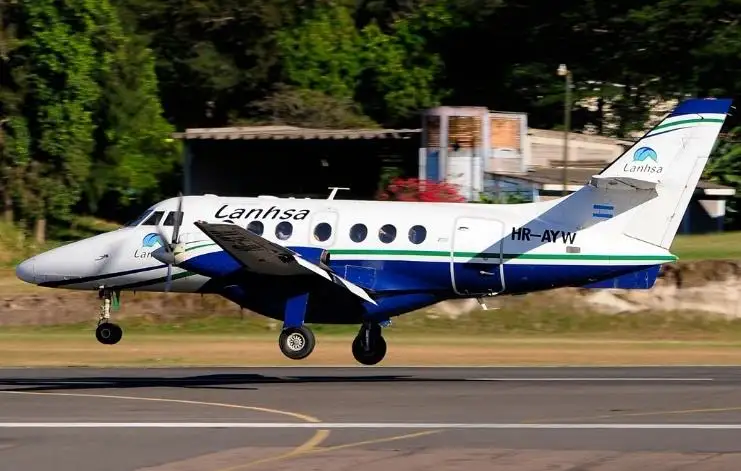
Hi everyone. If you follow the news in Roatan, you’re likely aware of the tragic accident involving LANHSA flight LNH018.
Today, the Aviation Accidents and Incidents Investigation Commission (CIAIA) released their preliminary report. Living here on the island, I want to share the verified facts with you directly, cutting through the rumors so you know exactly what the official investigation has found so far.
The Final Seconds of the Flight
On March 17, 2025, the Jetstream 32 aircraft took off from Roatan heading to La Ceiba with 17 people on board. During the initial climb, the plane deviated to the right of the runway centerline. According to the report, at an altitude of about 6 to 7 meters (around 20 feet), the right wing violently struck a wooden ladder attached to the VOR navigation station located next to the runway.
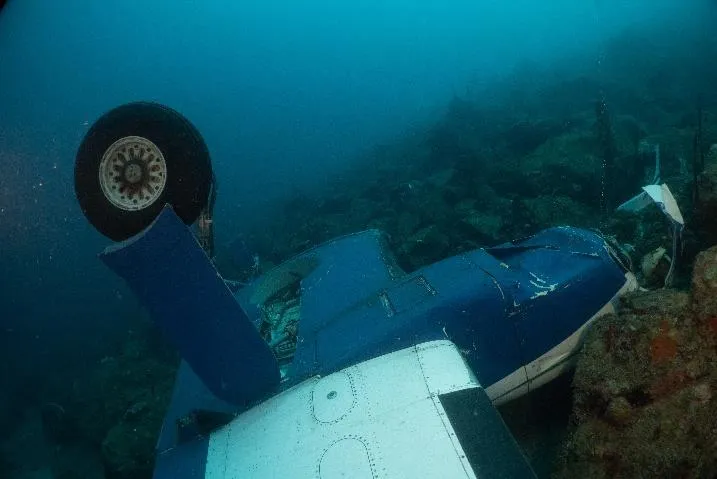
Following the impact, the aircraft continued to veer off course before crashing into the Caribbean Sea, about 100 meters off the coast. The wreckage ultimately sank to a depth of 164 feet (about 50 meters).
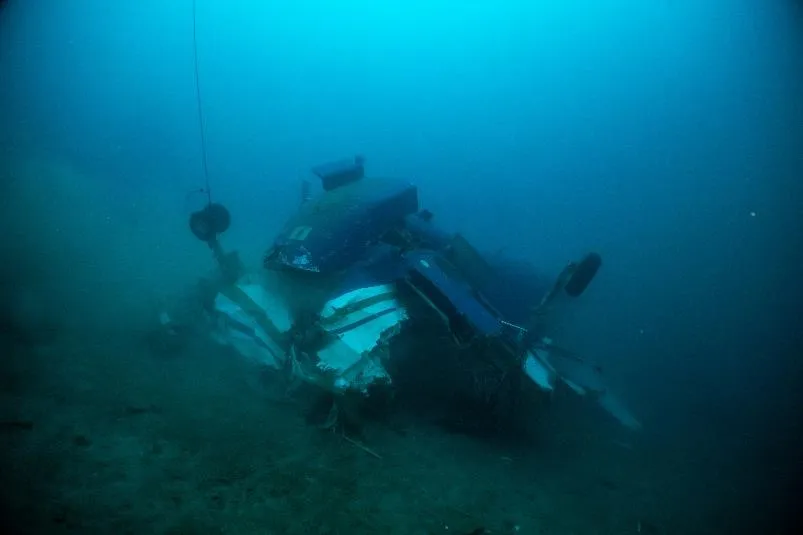
The toll of this tragedy is heavy: 12 people lost their lives, including both pilots, while 5 passengers survived with serious injuries.
Aircraft Condition and Crew Details
The CIAIA preliminary report clarifies several important elements:
- Weather was not a factor: Conditions were favorable at the time of the crash, with visibility exceeding 10 km.
- Weight and balance were fine: The aircraft was operating within its certified weight limits.
- A prior mechanical issue: Earlier that day in Puerto Lempira, a hydraulic fluid leak was detected and repaired before the plane was cleared to continue service.
- Highly experienced crew: The captain had 16,810 flight hours, and the first officer had 1,771 hours. Both had successfully completed their recurrent training just a couple of days before the accident.
- Missing or defective equipment: The aircraft did not have a Flight Data Recorder (FDR) on board, and its exemption to fly without one had expired back in 2021. Additionally, the emergency locator transmitter (ELT) failed to emit any signal after the impact.
What Happens Next?
It’s important to note that this is a preliminary report, meaning the exact cause of the fatal deviation is still undetermined. International specialists, including teams from the NTSB (USA) and AAIB (UK), are assisting local authorities. The Cockpit Voice Recorder (CVR) and the engines have been located on the sea floor and are awaiting recovery for deep analysis.
Our hearts go out to the families of the victims. Roatan is a tight-knit community, and a tragedy like this affects all of us deeply.
I will keep you updated as soon as the final report is published. Until then, take care.
Update, 1 September 2026: the wreckage has been raised
It happened. Seventeen months after the crash, the parts I mentioned above have been recovered.
The Honduran Navy began extracting the remains of the Jetstream 3200 in late August. The aircraft was lying in 45 metres (about 148 feet) of water, roughly 800 metres from the runway threshold at Roatán’s airport, directly on the approach line.
The part that matters for the investigation: the engines and the cockpit voice recorder are being shipped to the United States, to Washington, for analysis by NTSB specialists. That is precisely what the preliminary report lacked in order to move beyond physical observations.
What to take from this, and what not to conclude:
- No cause has been established. The authorities describe a search for evidence, never a conclusion. Nobody has said why the aircraft deviated.
- No timeline has been announced for the analysis or for the final report.
- The sources mention only the voice recorder, and that follows: as I wrote above, this aircraft carried no flight data recorder: its exemption had expired back in 2021. There is no FDR to recover. The entire technical reconstruction rests on the CVR and on the physical condition of the parts.
- One discrepancy worth flagging: the CIAIA report placed the wreck at roughly 50 metres (164 feet), while the Honduran press reports 45 metres. The gap is small and I have no basis to settle it, so I’m giving you both figures rather than picking one.
The baseline facts, unchanged: flight LNH-018 was flying Roatán to La Ceiba on 17 March 2025. Seventeen people were on board. Twelve died.
Sources: Contexto Honduras, 27 August 2026 and La Prensa, 29 August 2026.
Seventeen months is a long time for families waiting on an answer. I’ll keep updating this page, with verifiable facts and nothing else.